

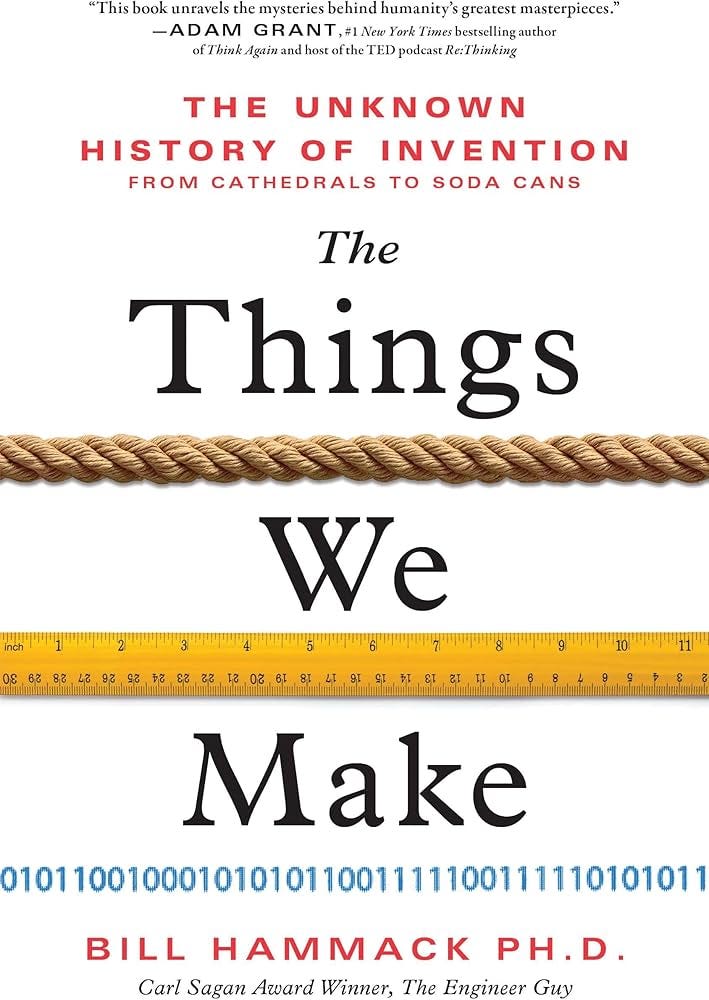
The Things We Make1 by Bill Hammack
Few books could deliver so little on such big promises. “How to build a cathedral without…a yardstick” and “From Mesopotamia…to space.” We get one (1) truly interesting historical engineering practice, such as using a rope to determine the proportions of an arch, followed by waffly space-filler until the next chapter and the next ungenerous drop of actual information. Somewhere buried inside him, the author has an engineer who loves solving physical problems. For every cool and inspiring solution, though, he has to tell us about a woman or a minority who did something too. It’s patronizing and tedious.
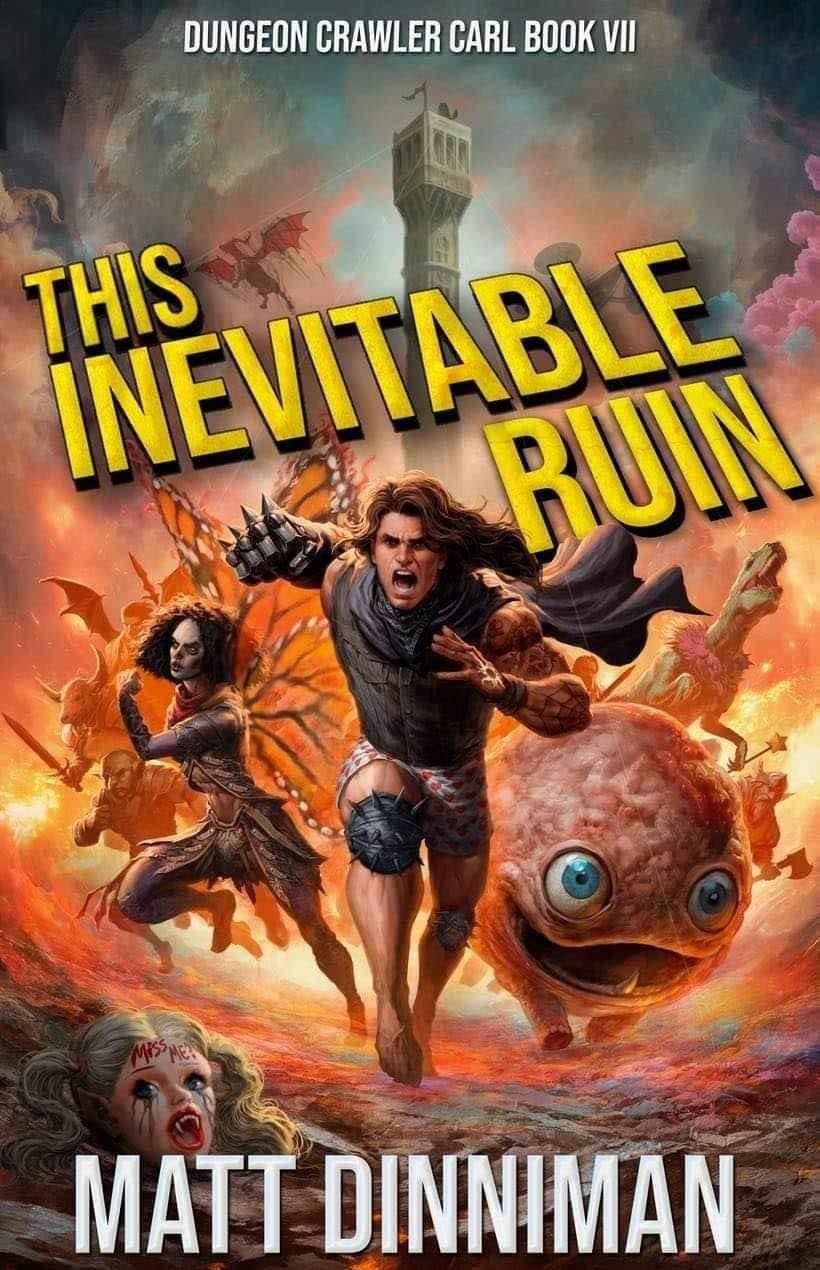
The Inevitable Ruin by Matt Dinniman
The chaos and gigadeath visited on Earth spill out into the wider galaxy, alien civilization starts to fall apart, and I’m left cold. There are some standout moments — Carl’s horror at discovering what the Bedlam bride is trying to do, the raid on the Naga royalty — but most of the rest of the book feels like boxes being checked off of Dinniman’s list. Slow down, man. Have fun with this. Get back in touch with the game you were playing in book one, before the stakes got so high. And do a round of structural edits.
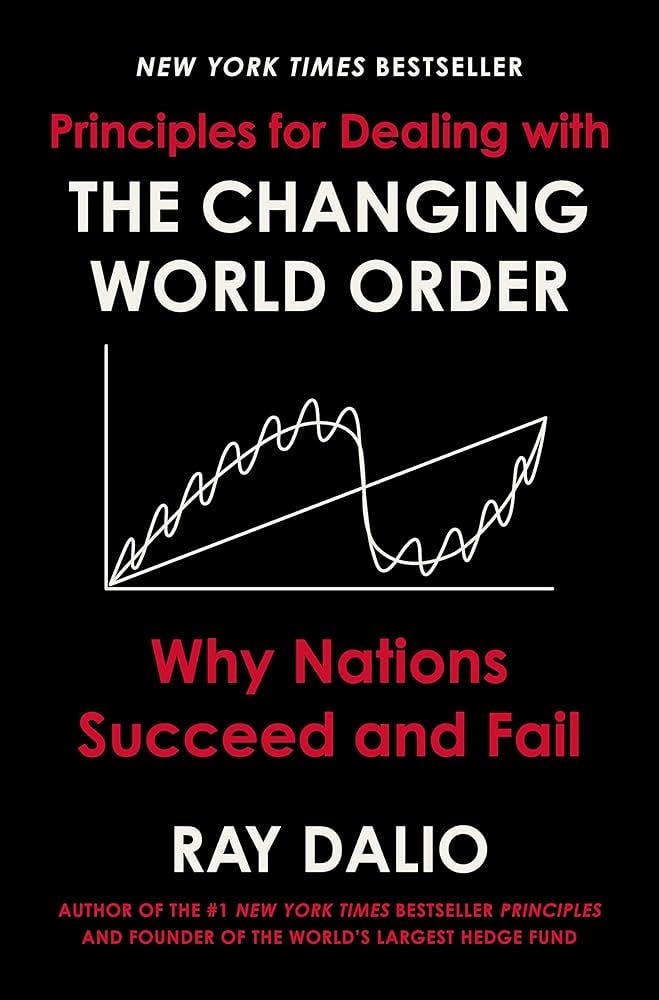
Principles for Dealing with the Changing World Order by Ray Dalio
I found Principles to be both useful and heartfelt. For this book, on the other hand… Calibrate your expectations with the following statement by the author on Marx: “I didn’t appreciate that Marx was a brilliant man who came up with some good theories and some seemingly bad ones that he would probably agree were not adequately tested and refined by the evolutionary system he espoused.” Okay, Grandpa.
Dalio is best when he talks about his expertise, which is finance. Going to him for political-philosophical — or worse, economic — insight is like going to a mechanic for lessons in particle physics.
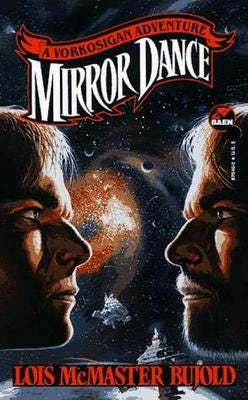
Mirror Dance by Lois McMaster Bujold
This one is so good it’s almost painful. Bujold was at the top of her career here, pulling off a complex plot that is both beautiful and symbolic. Imagine a car engine that teaches you about the nature of trust, is perfectly symmetrical, and wins Formula One races.
As for the story itself, it’s best if you start with one of the earlier books: The Warrior’s Apprentice or of course Shards of Honor. You need to know Miles, Mark, Bell, Ellie, and Aral Vorkosigan before Bujold smashes them.

A fun, interesting short story about corpse disposal and orbital mechanics. It promises, it delivers.

Read this to see health speaking to sickness. Sickness does not respond well, but the lesson is good: we have abandoned the distinction between authority and tyranny. We need to find it again, and not just for the sake of our sex-lives.
I include this one for the very Australian joke about tasting toxic plants.

I’ve been applying the advice here for a month and I can say it works. Quote, “it’s the final rep.”
Links to books are Amazon affiliate links
Thanks for the praise of Zombie, it was a fun story to write.
I heartily agree on Mirror Dance. That's a great book and sets up some serious developments in the rest of the series.
I'm more forgiving of Dungeon Crawler Carl wandering off track. The problem of the dungeon is unsolvable as is. Carl is going to have to drag something from outside in to have survivors.
It was literally my pleasure. :) Ask for Carl: It appears he's doing the opposite of what you say; he's expanding the dungeon to encompass the solar system as the ai's zone of influence grows. At this rate, Carl will have to choose between ruling as the fake king of a galactic dungeon (actually just the ai's favorite pet) or beating the ai and forcing it somehow to compromise.